Monday, February 13, 2012

Reflective Essay

In life, everyone experiences jealousy at some point. It eats away at a person leaving him or her feeling enraged and betrayed. But, after the jealousy subsides, what is left? Deep within a person, behind the superficial mask of jealousy, there is desperation. Desperation is a feeling that no one likes to admit to, however, it is timeless. It is felt by people from all time periods and in all scenarios. The mixture of these emotions leads people to perform desperate acts, often because these feelings are most prominent when dealing with relationships. In William Shakespeare’s, Othello, Roderigo is desperately in love with the betrothed Desdemona. Because he doesn’t know how to handle his helpless desire to Desdemona, he says, “I will incontinently drown myself.” (I.iii.302) Roderigo feels his life is futile because Desdemona doesn’t return his love for her. Feelings of rage and despair overwhelm his thoughts and prompt Roderigo to kill himself. That is one of the main themes in Othello. Jealousy leads to desperation and reckless acts. This theme is universal and can be found in a plethora of literary works and modern media.
            The theme of jealousy and desperation is evident through contemporary music. In Taylor Swift’s hit, You Belong with Me, she helplessly sings about a boy she wants to be with. The song title itself reflects a desperate plead for love. Even though Taylor doesn’t contemplate suicide as does Roderigo, it is evident she is anguished by her loneliness. This song embodies the idea of desperation and jealousy. In this song, Taylor Swift sings to the boy she loves, professing her love to him while also exhibiting her jealousy of the girl he is currently with. When she sings, “Standing by and waiting at your back door, All this time, how could you not know? Baby, you belong with me, you belong with me,” (Swift) she is pleading and begging him to notice her. This is her desperate attempt to gain this boy’s attention. Jealousy is conveyed through the lines, “I'm listening to the kind of music she doesn't like, and she'll never know your story like I do. But she wears short skirts, I wear T-shirts, She's Cheer Captain and I'm on the bleachers, dreaming about the day when you wake up and find that what you're looking for has been here the whole time.” (Swift) She is releasing her anger about this boy being with another girl. She wishes that she could be that girl because she is with the boy she loves. Like Roderigo, Taylor is in despair because of someone she can not have.
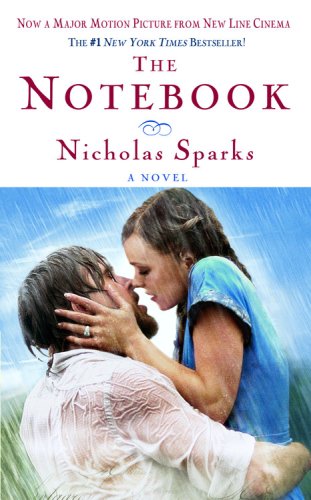
            Jealousy and despair is also common in literary novels. It is very evident in Nicholas Sparks’ novel, The Notebook. Noah and Allie fell in love at a young age. After a long year together, Allie’s family moved away. Noah and Allie were both distraught, so in effort to save their relationship, Noah desperately wrote Allie a letter every day for a year. (Allie never got the letters.) Years later, Allie is engaged, but has a lingering desire to visit Noah. Once Noah discovers she is engaged, he becomes jealous and wants her more desperately than he did before. After spending a few days together, they were once again madly in love. Allie realized she had to make a choice between the love of her life, Noah and her fiancĂ© Lon. Noah pleaded to Allie, “I don’t want to live the rest of my life thinking about you and dreaming of what might have been. Stay with me Allie.” (Sparks 139) Because Noah was so jealous and helplessly in love, he attempted to evoke pity, to convince Allie to stay with him. This further proves the timelessness of jealousy and desperation in relationships. The time period, gender, and circumstance have no effect on the outcome of jealousy. These emotions encourage thoughtless acts of desperation that are life threatening, harmless, courageous, or pitiful. Whether it be a Shakespearean play, a 1930’s novel, or a modern music hit, jealousy and desperation mesh together and prompt irrational thoughts and actions.


Works Cited
Perrine, Laurence. “Othello.” Perrine’s Literature: Structure, Sound, and Sence. Fort           Worth. Harcourt College. 2002. 1361-1462. Print.
Sparks, Nicholas. The Notebook. New York: Warner, 1996. Print.
Swift, Taylor. "You Belong with Me." Fearless. Taylor Swift. Big Machine Records,     LLC, 2008. CD.

Tuesday, January 31, 2012

Othello 6

"Villainy, villainy, villainy!"
During this play, I couldn't help but notice the differences within the time the play was set and now.I thought it was strange that Iago's lie seemed to be a much worse crime than Othello's murder. In today's world, I feel like lying is second nature for many people. Today, if Othello would have been manipulated by Iago like he was, and Iago physically did nothing and Othello killed someone, Othello would be punished. I don't think Iago would have any punishment at all. But, Othello would be imprisoned for life no matter if he was manipulated or not. Today, we would think Othello was just an idiot for letting himself get used like that. But, back in Shakespeare time, lying was huge. Honor, nobility, and honesty were the best qualities a man could posses. Now things have changed. Honesty and truth seem to have been replaced with money and power.

Othello 5

"If I do die before thee, prithee shroud me in one of those same sheets."
Othello is full of dramatic irony. It is typically expressed through Iago's  asides. I ago conveys his secret plans to the audience, and the characters don't know whats going to happen. I find it really ironic that Desdemona references death right before Othello kills her. She didn't know that she was about to be killed, but the audience did. They knew what Othello was planning to do to her. It seems like this irony was supposed to be humerus in some sick and twisted way, but I don't know. I wasn't very shocked by all of the deaths at the end. Shakespeare likes to kill off his main characters. I thinks that's kind of creepy. But times are different now, so maybe it has some sort of significance.

Othello 4

Emilia: "She give it Cassio! No, alas, I found it, and I did give 't my husband."
Emilia is probably my favorite character. She really proved to be a dynamic and very crucial character. At the beginning of the story, she let Iago walk all over her. He constantly disrespected her, and she just took it. But, as the story progressed, she underwent a significant change. She developed the courage to stand up to Iago. If it wasn't for her, the resolution of the story may have been different. Emilia prevented Iago from getting away with his heinous lies.  This was a big deal because in that time period, women didn't have that much respect. They weren't really listened too, but the officials let her speak. By allowing Emilia to talk, the truth came out.

Thursday, January 26, 2012

Othello 3

"I will incontinently drown myself." pg. 1380
Throughout the first few acts of Othello, four major themes have surfaced. The first is jealousy is a powerful, often destructive force. Roderigo is insanely jealous of Othello and Desdemona's relationship with one another. Roderigo is in love with Desdemona and considers suicide because he cannot handle his jealous feelings. The next theme is hatred is often based on preconceived notions. This was exhibited when Brabantio expressed his hate for Othello. The only reason Brabantio claimed hatred was because Othello married his only daughter. Brabantio based his hatred on a preconceived notion rather than considering who Othello was as a person. The third theme of this play is appearance and reality are not always the same. This is displayed through Iago's character. Most people consider Iago to be a very noble and honest man; however, the readers know that he is a very manipulative man with an agenda. The last theme is showing love can often require courage. This is expressed through Othello. When professing his love for Desdemona, he had to be very courageous. He was standing before her father and discussing how he loved her. This takes a plethora of valor to do, but his love for Desdemona is worth it.

Othello 2

"I hate the Moor, and it is thought abroad that 'twixt my sheets he's done my office." pg .1382
Iago deeply hates the Moor, Othello. His hatred is motivated by his job. Iago is upset because Othello appointed Cassio to lieutenant instead of him. Iago felt he had been cheated because he held seniority where as Cassio was simply the favorite. He also hates Othello because there is a scandalous rumor going around that Othello slept with Emilia, Iago's wife. Iago has planned to channel his anger and despise for Othello with revenge. Iago is very manipulative. He is determined to ultimately manipulate Othello into believing that he is the better man for the lieutenant position. In most stories, the antagonist fails to prevail over the good. But, I think Iago may end with triumph. I think this because we are hearing the story through his point of view, which is not typical of Shakespearean work.

Othello 1

"I have told thee often, and I retell thee again and again, I hate the Moor." pg. 1381
In most Shakespearean plays, the story is told from the protagonist point of view. However, the point of view in Othello is unique. It is told from the antagonist point of view. Iago, the antagonist, is a very manipulative man. He has plotted a scheme that will get him revenge. Because the story is told from Iago's point of view, the reader knows and understands why Iago is seeking revenge. Through asides and soliloquies, the readers learn Iago's deep personal thoughts. These are thoughts that are only known by Iago and the audience. This generates suspense because it is as if the audience is taking part in the manipulation. The rest of the characters are unaware of the events to come, and the audience is unaware of when Iago's plan will be executed fully.